
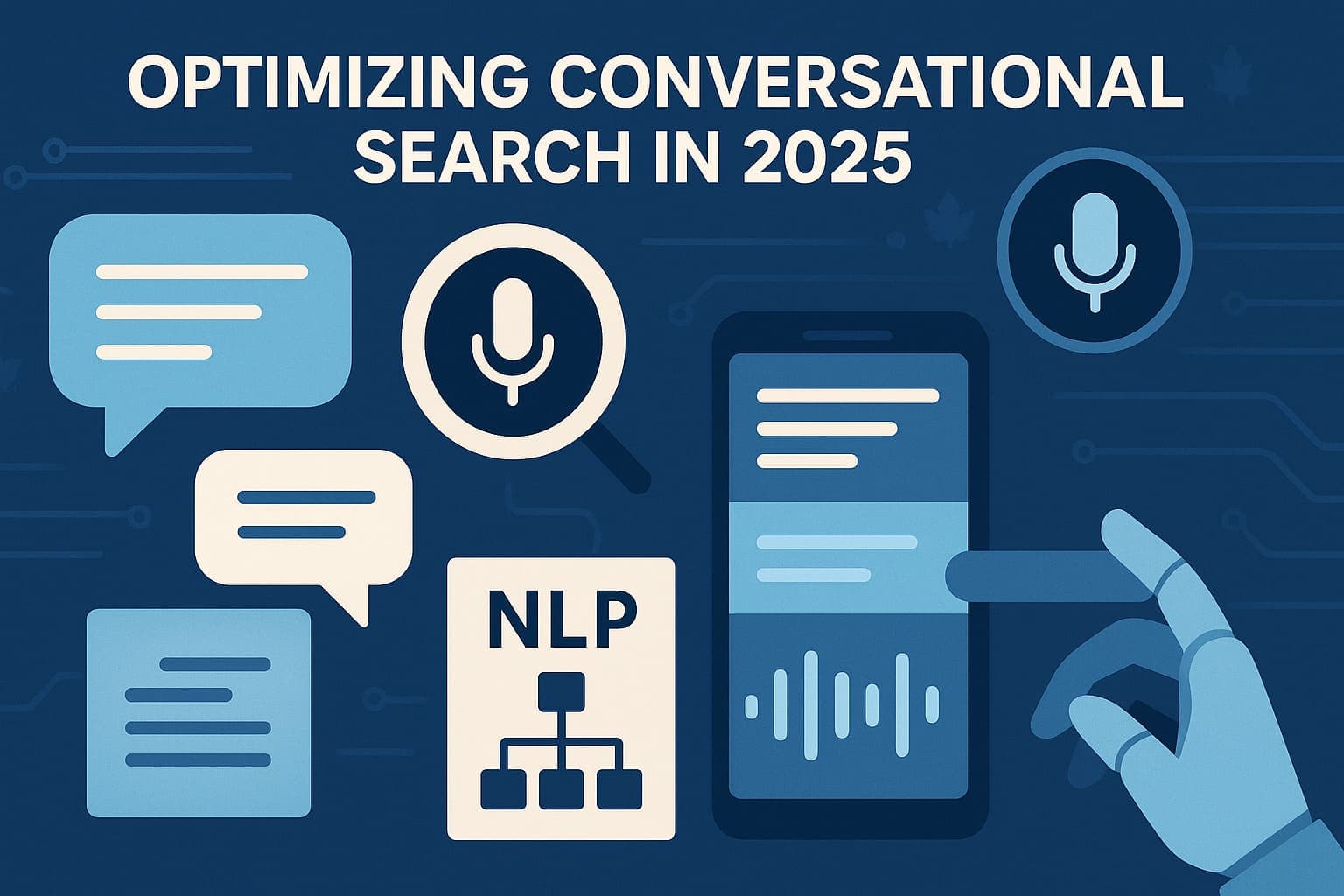
As digital assistants become ubiquitous and users increasingly speak their queries instead of typing them, conversational search is rapidly changing how we find information online. In 2025, optimizing for voice search and natural language understanding (NLU) is no longer optional—it’s essential. This guide will walk you through the fundamentals of natural language processing (NLP), voice search best practices, and actionable tactics to ensure your content ranks well in the age of conversational queries.
Understanding Conversational Search in the Modern Landscape
Search engines have evolved from matching exact keywords to interpreting meaning and context. This shift toward semantic search means Google, Bing, and other engines strive to understand user intent rather than just keywords. Conversational search—often powered by voice assistants like Siri, Alexa, and Google Assistant—takes this further: users ask full questions in natural language, expecting direct, spoken answers.
Defining Conversational Search
Conversational search refers to queries phrased as natural, spoken language—often phrased as complete questions or commands. Instead of typing “weather Toronto,” a user might say, “Hey Google, what’s the weather forecast in Toronto this weekend?” Search engines process these queries through sophisticated NLP models to deliver precise, context-aware results.
Why Conversational Search Matters in 2025
By 2025, voice-enabled devices are projected to perform over half of all online searches. Consumers appreciate hands-free convenience during cooking, driving, or multitasking. For businesses, failing to optimize for conversational search risks missing out on high-intent traffic and voice-driven purchases. Embracing voice and conversational SEO ensures you stay ahead of competitors and capture emerging user behaviors.
The Role of NLP in Conversational Search
Natural language processing underpins conversational search by allowing machines to understand, interpret, and generate human language. Advances in machine learning and deep learning—such as transformer-based models like BERT and GPT—have improved search engines’ ability to parse nuances in phrasing, context, and sentiment.

Natural Language Processing Fundamentals
NLP involves several sub-tasks:
- Tokenization: Splitting text into words or phrases
- Part-of-speech tagging: Identifying nouns, verbs, adjectives, etc.
- Named entity recognition: Detecting people, places, and organizations
- Dependency parsing: Mapping grammatical relationships
These steps enable search engines to dissect conversational queries, understand the user’s real intent, and retrieve or generate relevant responses.
Semantic Understanding and Machine Learning
Modern search algorithms use vector-based representations of words (embeddings) to capture semantic relationships. When a user asks, “Where can I find vegan restaurants near me?” the engine recognizes “vegan,” “restaurants,” and “near me” as entities and intent signals—leading to localized, intent-matched results. Training on vast datasets helps the AI associate synonyms, colloquialisms, and contextual cues for more accurate answers.
Voice Search Optimization Tactics
Optimizing for voice search requires both content and technical adjustments. Voice queries tend to be longer, more conversational, and question-based. Aligning your pages with these patterns maximizes the chance of being featured as a voice answer.
Crafting Content for Voice Queries
- Use question-based headings: Format subheadings as “How,” “What,” “Where,” “When,” and “Why” questions to mirror voice search phrasing.
- Answer questions clearly: Provide concise, accurate answers (preferably under 50 words) near the top of the page, then expand with more detail.
- Include conversational language: Write in a natural tone using everyday terms rather than overly technical jargon or keyword-stuffed prose.
Targeting Featured Snippets and “Position Zero”
Voice assistants often read aloud content from featured snippets. To optimize:
- Structure content into bullet lists or numbered steps for “How To” queries.
- Summarize definitions or instructions in the first two sentences of a section.
- Implement FAQ structured data to signal question-and-answer pairs directly to search engines.
Content Creation Strategies for Conversational SEO
Long-tail, natural language phrases are the backbone of voice search optimization. While traditional SEO may focus on “best running shoes,” conversational SEO targets “What are the best running shoes for marathon training?”
Mapping User Intent
Conduct thorough keyword research that includes question-based queries and related search suggestions. Tools like AnswerThePublic, Google’s “People Also Ask,” and transcription of voice assistant responses help identify the most common conversational phrases in your niche.
Building Topic Clusters and Pillar Pages
Organize your site around pillar content—comprehensive guides on core topics—supported by cluster pages addressing specific questions. For example, a “Running Shoes Guide” pillar might link to cluster articles like “How to Choose Shoes for Flat Feet” and “When to Replace Running Shoes.” This structure signals topical authority and semantic relevance.
Incorporating LSI and Semantic Keywords
Use latent semantic indexing (LSI) keywords—terms that are contextually related to your main topic—to enrich your content. For instance, in a voice SEO article on CBD for travel, include “cannabidiol gummies,” “travel anxiety,” and “CBD dosage” naturally within your text to satisfy search engines’ semantic models.
Technical SEO Considerations for Voice Search
Beyond content, ensure your site’s technical setup supports fast, reliable responses for voice queries.
Implementing Structured Data
Schema markup such as FAQPage, HowTo, and QAPage helps search engines understand content structure. JSON-LD is the preferred format—easy to insert in your HTML <head> without altering visible content.
Optimizing Page Speed and Mobile Usability
Voice searches predominantly occur on mobile devices. Google’s Core Web Vitals—covering loading (LCP), interactivity (FID), and visual stability (CLS)—are critical. Optimize images, leverage browser caching, and use responsive design to ensure swift, seamless experiences.
Ensuring Secure, Accessible Content
Use HTTPS to secure user interactions. Accessibility features—such as descriptive alt text for images and clear heading hierarchies—improve comprehension for both users and AI crawlers, enhancing your semantic SEO proficiency.
Tools and Best Practices for Continuous Improvement
Optimizing for conversational search is an ongoing process. Leverage tools and analytics to track performance and adjust strategies accordingly.
Voice Search Analytics
Standard analytics platforms may not fully capture voice queries. Use Google Search Console to monitor query impressions and CTR for question-based keywords. Third-party tools like SEMrush’s Voice Search Tracker can provide deeper insights into your site’s performance in voice search results.
A/B Testing and User Feedback
Regularly test different answer lengths, formats, and content structures to see which configurations secure featured snippets. Solicit user feedback through on-page surveys or usability studies to understand how real people interact with your voice-optimized content.
Staying Updated on NLP Advances
Follow industry resources—such as Google’s Search Central Blog, SEO conferences, and AI research publications—to stay informed about advancements in NLP models and voice search algorithms. Adapting quickly to changes ensures your site remains competitive in the evolving semantic search landscape.
Read Also : The Rise of Voice Search in Canada: How Local Businesses Can Get Found
Conclusion
As voice assistants and smart speakers proliferate, conversational search optimization will be a key differentiator in 2025 and beyond. By understanding the principles of NLP, crafting content that mirrors natural language queries, and fine-tuning technical elements like structured data and page speed, you position your site for success in the era of voice-activated search. Start by mapping user intent, creating question-driven content, and implementing the right schema markups today—your future visitors (and their voice assistants) will thank you.
About the Author

Rajesh Jat
SEO Specialist at ImmortalSEO with expertise in technical SEO and content optimization.
View all posts